Journey To ChinaLast updated
Plump, tender oysters that change with the cooking method
Shajing oysters are known for a plump body: the pale centre is tender while the edge retains a little spring. Salinity comes first, followed by mild sweetness and a mineral note. Freshness, size, farming water and cooking time all change that balance, while steaming, braising, pan-frying and deep-frying direct the juices, garlic, toasted aroma and crunch in different ways.
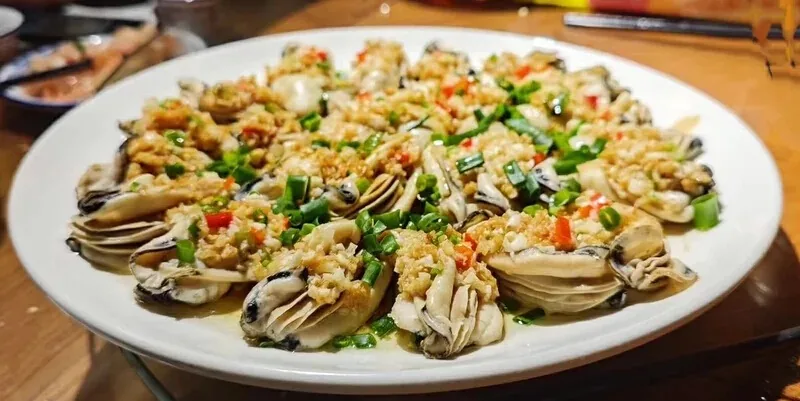
The half shell catches each oyster's juices while garlic, chilli and scallion season the surface for sharing from a large plate.
Steaming keeps the juices; crisp-frying builds two textures
For the garlic-steamed version, each opened oyster remains in its half shell under chopped garlic and a little oil. Steam turns the flesh from translucent to opaque while the liquid in the shell mixes with the sea flavour, garlic and scallion. Lifting the oyster with some of that liquid combines a tender centre, springier edge and granular garlic in one mouthful.
Blanching leaves the original salinity relatively exposed. Ginger-and-scallion braising adds sauce and wok aroma, while an oyster omelette disperses the juices of smaller oysters through egg and browned edges. Crisp-fried oysters are removed from the shell, briefly blanched and dried, coated in batter and fried at high heat. The crust sets quickly while the centre stays juicy; that contrast is strongest straight from the fryer.
Fresh, golden, dried and sauced forms on one menu
Fresh oysters retain the most internal moisture and work well steamed, blanched, braised, fried or cooked in egg. Golden oysters, or jin hao, are partially dried until gold outside but still somewhat yielding within. Their concentrated aroma suits pan-frying or cooking with cured meat and rice.
Oyster jerky, hao shi, is dried further, becoming smaller, firmer and more concentrated. It releases savoury sweetness into Cantonese soups, braises and festive dishes. Oyster sauce comes from cooking and seasoning oyster extract; it is a liquid condiment rather than a textural substitute for a whole oyster.
Half-shell oysters may be priced by piece or plate, whereas battered oysters arrive as a shared plate of shucked meat. For more juices, look for steamed, blanched or ginger-scallion fresh oysters. Pan-fried golden oysters and crisp-fried oysters bring more toasted aroma and a stronger textural contrast. Confirm the method, count and whether the menu means fresh or dried oysters before ordering.
A long oyster-farming tradition at the Pearl River Estuary
Shajing lies in western Bao'an beside waters where the Pearl River meets the sea. Local memories of oyster farming reach the Song period, and by the Ming period farmers used pieces of pottery as surfaces for oyster spat. Nursery, growing and fattening grounds once occupied different waters, creating a working cycle governed by tides, moving oyster pillars, shucking and processing.
As the Pearl River Delta urbanised in the late 20th century, Shajing oyster farmers extended production to other parts of Guangdong, including Taishan, Yangjiang and Huidong. Farming now occurs across several coastal areas, while processing, sales, skills and cultural organisations remain associated with Shajing. The local Oyster Culture Museum displays tools and explains that history, connecting the dish to a maritime Shenzhen that predates its towers and electronics factories.
Shellfish and cooking note
Oysters are shellfish. Raw or undercooked oysters carry a higher risk of foodborne illness; garlic, chilli, vinegar and alcohol do not replace thorough cooking. Traditional crisp batter may contain lard, so ask about the day's recipe when avoiding shellfish or pork products.