Journey To ChinaLast updated
Your first airport map: T3, T4 and the Ground Transportation Center
Hangzhou Xiaoshan International Airport (HGH) lies southeast of central Hangzhou. T3 currently handles mainly domestic flights, while T4 serves domestic as well as international and regional services. T2 renovation and airline allocations can change, so the boarding pass, baggage-belt screen and same-day terminal signs provide the final location.
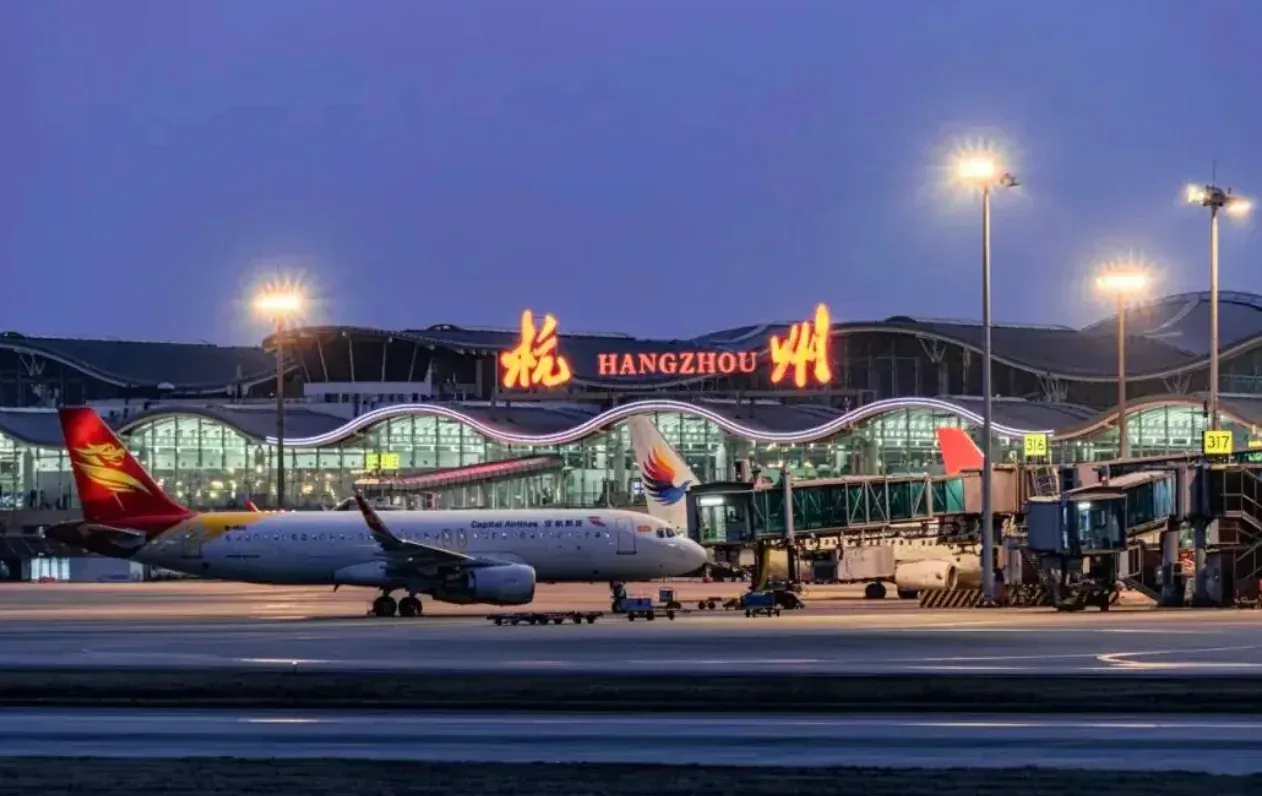
T3 and T4 connect with the Ground Transportation Center, where metro, ride-hailing and coach facilities occupy different levels.
The Ground Transportation Center stands between the terminals and connects metro platforms, taxi and ride-hailing areas, car parks and the coach station. T3 and T4 enter it from their respective arrival areas: F1 carries ground-transport connections, while B2 contains access to the metro and ride-hailing zones. Yellow and blue wayfinding signs generally include English. A gate number, floor and lift lobby identify a meeting point more precisely than the general word “airport.”
After baggage claim in T3, Gate 14 is an important fork. The taxi rank is outside, while signs for the Ground Transportation Center, metro and ride-hailing lead into the connecting passage and down to lower levels. From T4, the taxi route passes through the F1 connection between T4 and the transportation center; metro and ride-hailing continue downward. Travelers arriving on separate flights can meet at a precise point such as “T3 Arrivals Gate 14” or “the T4–Ground Transportation Center link.”
Lines 1, 7 and 19 reach different parts of Hangzhou
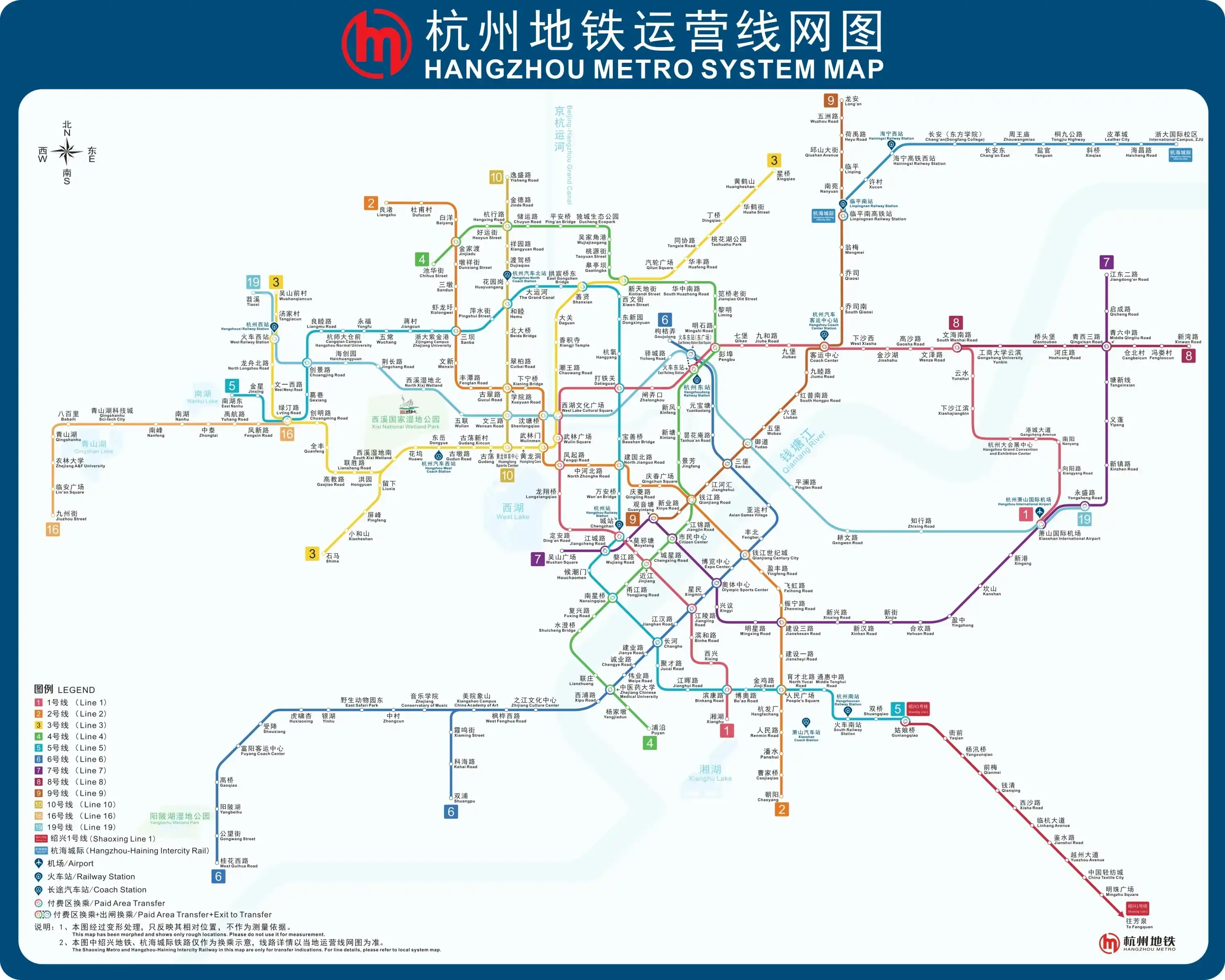
All three metro lines stop at Xiaoshan International Airport Station (萧山国际机场站). The useful line depends on the side of Hangzhou containing the hotel, attraction or onward railway station. A live route planner calculates transfers, while the relationships below make the directions easier to recognise.
Line 1: Lakeside, Hangzhou Railway Station and Hangzhou East
Line 1 stops at Longxiangqiao (龙翔桥), the metro gateway to the eastern shore of West Lake, Yan'an Road and the Lakeside commercial area. Chengzhan (城站) serves Hangzhou Railway Station, while East Railway Station (火车东站) serves the much larger Hangzhou East hub. The two railway stations have separate locations and names.
Line 7: Wushan, Hefang Street and eastern Nanshan Road
Line 7 runs to Wushan Square (吴山广场), close to Hefang Street, the southern section of Southern Song Imperial Street, Wushan Hill and the eastern end of West Lake's southern shore. Leifeng Pagoda, Su Causeway, Prince Bay Park and shores farther west require a final walk, bus or road connection from this side of the lake; a precise entrance name makes that last segment easier to plan.
Line 19: the eastern and western rail hubs
Line 19, commonly called the Airport Express, links East Railway Station (East Square) with Hangzhou West Railway Station. At Hangzhou East, the words “East Square” describe the metro approach to the same railway complex; follow railway-departure signs from the platform. The line also serves western Hangzhou and Future Sci-Tech City. Reaching the traditional Lakeside area involves a transfer to the regular metro network.
First and last trains are published separately by line and direction, so three platforms at the airport can have different operating periods. For an evening arrival, the airport website, Hangzhou Metro information or live navigation shows the services still available that day.
Taxis use the arrivals level; ride-hailing uses B2
The airport identifies taxi ranks by terminal: T3 uses the area outside Gate 14 on the arrivals level, and T4 uses the F1 link between T4 and the Ground Transportation Center. Presenting the hotel's Chinese name and address helps the driver identify the correct branch or lakeshore entrance.
Ride-hailing pickups occupy designated areas on B2 of the Ground Transportation Center, associated in the airport guide with lift lobbies 2, 3 and 4. The app displays the current zone, bay or lift lobby after booking. From T3, follow transportation-center signs near Gate 14 and descend; from T4, enter through the transportation-center connection and continue to B2. At the pickup level, match the app's zone and vehicle plate.
Ground transport remains clearly organised after metro hours
When rail service has finished for the day, the signed taxi ranks and B2 ride-hailing zones remain the clearest pickup points. Airport coaches and some intercity buses depart from the Ground Transportation Center; its coach station is on the northwest side of F1. Travelers using passports for a实名 ticket can use the staffed counter. Routes, departure times and ticket availability should be checked on the airport website or the terminal screens on the day of travel.
A saved Chinese address is especially helpful at night. Hangzhou has roads with similar names, multiple branches of the same hotel and entrances distributed around different lake shores. Store the hotel name, district, street and telephone number so a driver or information desk can confirm the destination. Airport information counters and the digital terminal map can also locate baggage storage, charging and other passenger services.
Connecting to high-speed rail: the full station name determines the route
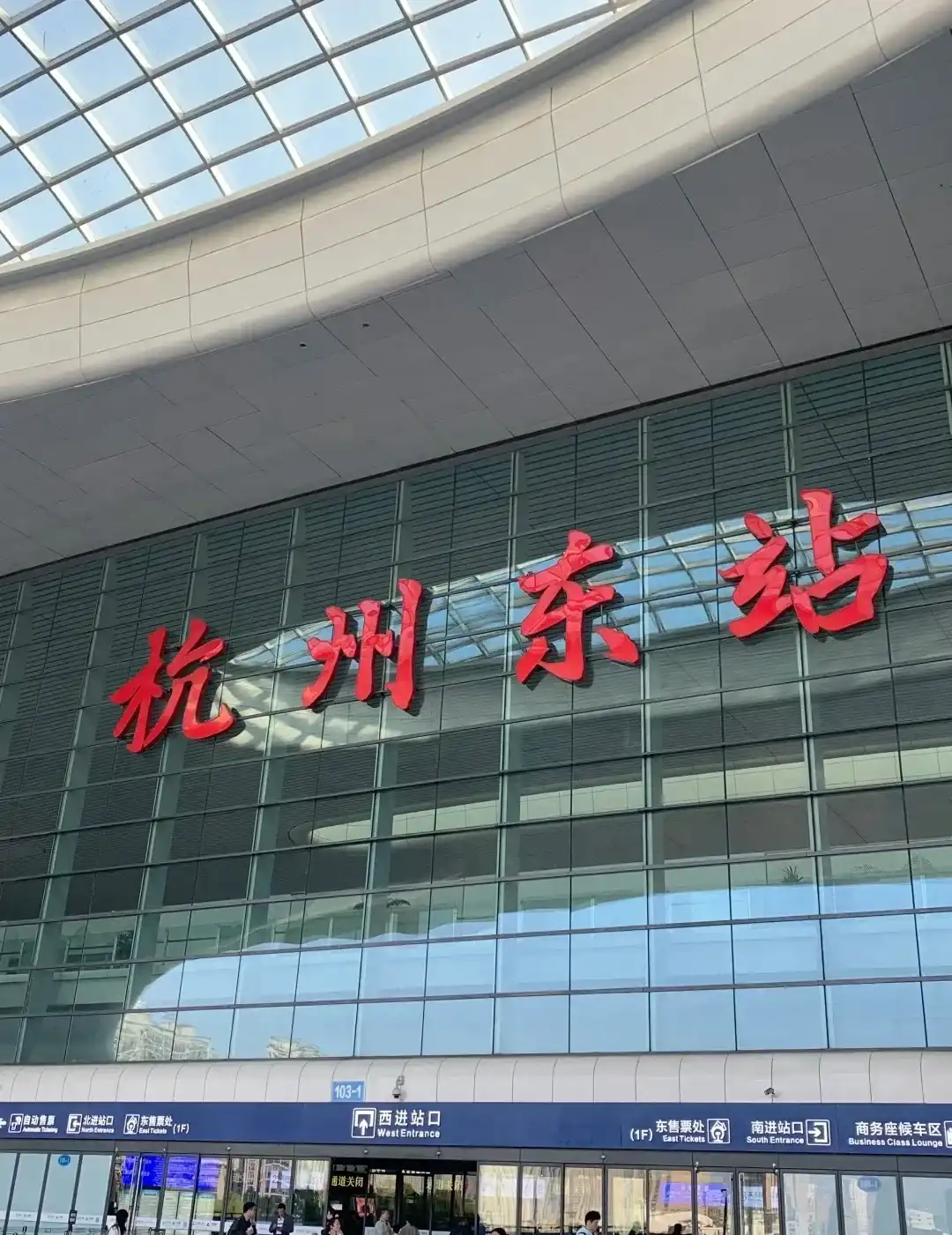
Hangzhou's main passenger stations are Hangzhou Railway Station (杭州站), Hangzhou East (杭州东站), Hangzhou West (杭州西站) and Hangzhou South (杭州南站). Hangzhou Railway Station is also known locally as Chengzhan. Line 1 connects the airport with Hangzhou Railway Station and Hangzhou East; Line 19 connects the East Square side of Hangzhou East with Hangzhou West. A trip to Hangzhou South uses the current route planner for its metro connection.
Railway departure adds document checks, security, movement through the station and finding the waiting area and gate. Keep the original passport, 12306 order and complete train details accessible. An international air ticket and high-speed-rail ticket are normally separate bookings, so the connection includes actual flight arrival, baggage claim, travel across the city and railway check-in procedures.
Immigration, through tickets and terminal changes follow different paths
International and regional arrivals normally use T4 for immigration procedures. Travelers ending their journey in Hangzhou pass border control, collect baggage and clear customs before entering arrivals and following metro or ground-transport signs. For a through itinerary, the baggage tag, possession of the next boarding pass and any requirement to clear immigration and recheck bags determine the transfer path.
The airport provides cross-terminal transfer points on the T3 arrivals and departures levels and in the T4 domestic mixed-flow area, with common signs linking T3 and T4. Present both flight sectors and the baggage receipt at a transfer counter so staff can identify the next security checkpoint, desk and gate area. International-to-international, international-to-domestic and domestic cross-terminal connections each follow a specific process shown on the airport's current transfer page and at the day's service desks.
Save one information card for offline use
- Flight number, expected arrival terminal and a precise meeting point;
- the hotel's or railway station's full Chinese name, Chinese address and telephone number;
- the intended metro line and the taxi or ride-hailing pickup point available after metro hours;
- screenshots or links for the airport's metro, coach and transfer pages;
- original passport, onward booking and baggage receipt.
This card keeps the airport layout, city destination and onward transport in one place. If a terminal or service changes, screens, gate numbers and floor signs provide enough information to adjust the route.