Journey To ChinaLast updated
A flat map represents a city of rivers, tunnels, and vertical streets
Chongqing's rail network spreads along both banks of the Yangtze and Jialing rivers. Lines cross by bridge or tunnel and run deep inside Yuzhong Peninsula, Nan'an, and the northern hills. Two stations may look close on a map while their exits reach a riverside road, a hilltop street, a commercial podium, or a deep underground level. Plan with the line, interchange, exit number, and destination entrance together.
The official network uses several systems. Lines 1, 4, 5, 6, 9, 10, and the Loop Line are metros; Lines 2 and 3 are straddle monorails; rapid and suburban railways also appear in the wider network. Local speech may use “light rail” for the whole system, but official line numbers, colours, and names provide reliable navigation.
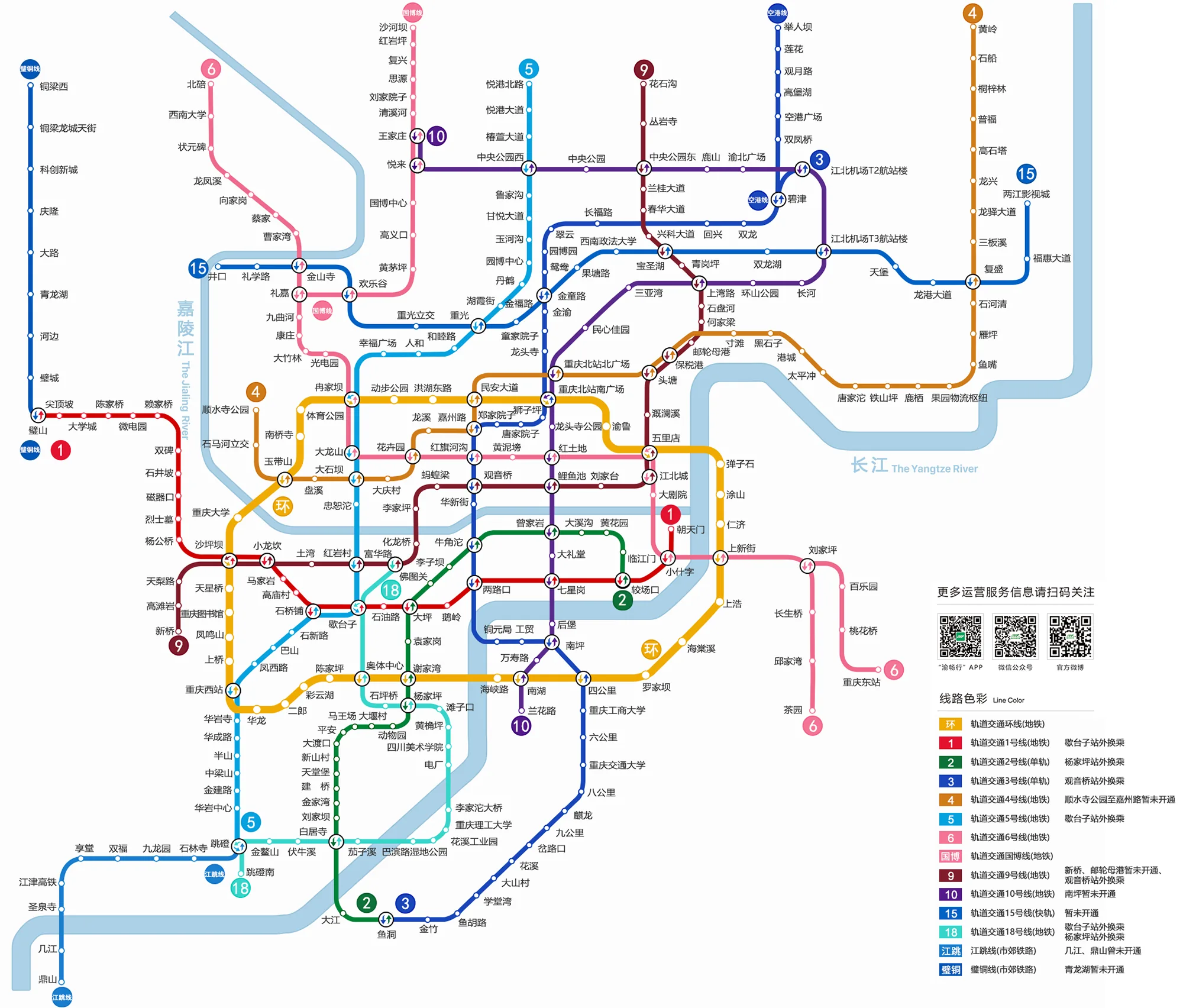
This diagram shows the geographic relationship between lines and the two rivers; use the official 2026 network map and station screens for current operating sections and interchanges.
Line 2 turns mountain-city engineering into a view
Line 2 follows part of the Jialing River, and Liziba station was designed together with the residential building around it. The platform serves everyday travel; the street-level viewing area shows the train, building, and hillside in one frame. Farther along Line 2, Linjiangmen enters the Jiefangbei district, while Zengjiayan connects with Line 10 for Jiangbei Airport and Chongqing North.
Line 3 is also a straddle monorail and includes both elevated and underground sections. Elevated trains reveal hills, roads, and dense towers; underground sections use concourses and exits like the metro. These lines are working urban infrastructure as well as a distinctive way to see Chongqing.
Scan an activated transit code or buy a single-journey ticket
Travellers who have completed identity, payment, and local transit-code activation can use the Chongqing public-transport QR code in WeChat or Alipay. One person uses one code, with the same code at entry and exit. The ordinary merchant payment screen in either app is a different function.
Without a linked account or activated code, buy a single-journey ticket from a machine or service centre. Select the destination and passenger count, pay with a supported method, and keep the physical ticket through exit. At supported staffed ticket windows, UnionPay, Mastercard, Visa, JCB, and American Express cards can purchase single-journey tickets or specified products. This is a ticket-window service, not a claim that every gate accepts direct foreign-card tapping.
Day passes, multi-day passes, physical transit cards, and the operator app are optional for repeated travel. An activated QR code or a single-journey ticket covers the main needs of a short visit.
Five transport hubs each have a clear rail connection
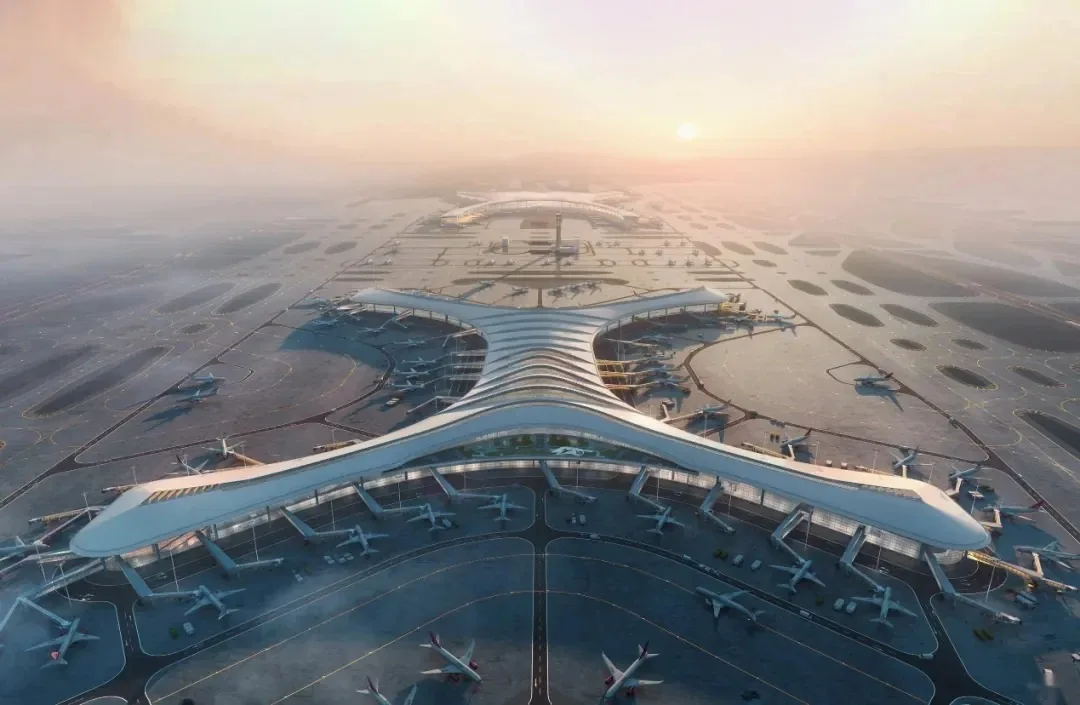
- Jiangbei Airport T3: Line 10 serves Chongqing North, Zengjiayan, Qixinggang, and Nan'an.
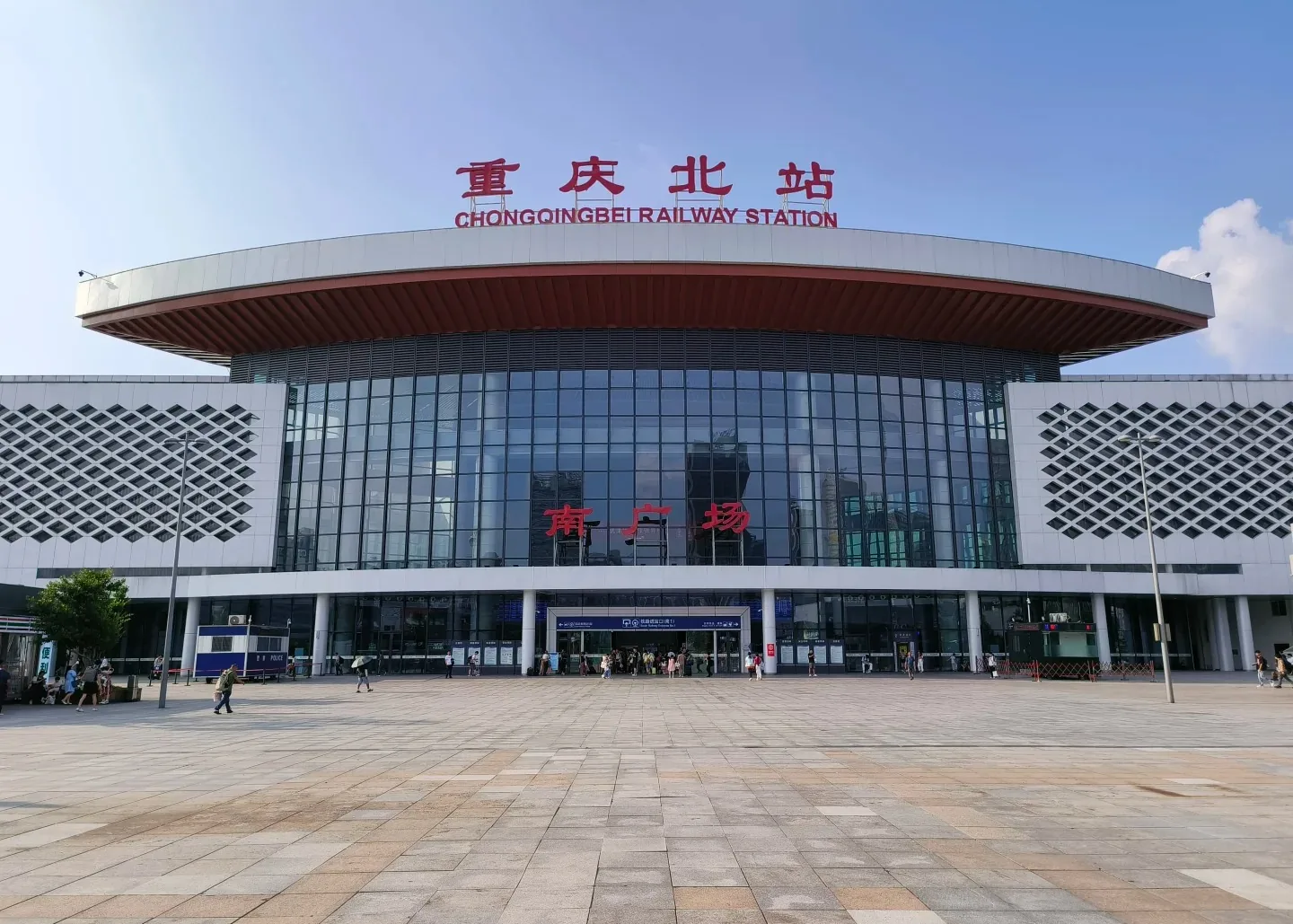
- Chongqing North: Line 10 serves both sides; North Square also has Line 4, while South Square has Line 3 and the Loop Line.
- Chongqing West: Line 5 and the Loop Line enter the integrated hub.
- Chongqing East: the Line 6 East section connects at Liujiaping for the main Line 6 service.
- Shapingba: Lines 1, 9, and the Loop Line connect within the paid area.
These relationships also clarify a cross-station railway connection. When the next rail ticket names another Chongqing station, include the city journey, station entry security, and a new waiting period.
Attraction routes continue through an exit at a specific height
Xiaoshizi and Linjiangmen serve different approaches to Jiefangbei and Hongya Cave. Line 1 reaches Chaotianmen and Ciqikou; Line 2 serves Liziba. The Three Gorges Museum and Great Hall area can be approached through Great Hall station or nearby lines according to the next walking destination.
Before leaving the paid area, check the exit map for road name, landmark, and lift. Straight-line distance cannot show Chongqing's height difference; another exit at the same station may lead to a different floor, slope, or road crossing. With luggage, the lift symbol and the hotel's Chinese entrance address are especially useful.