Journey To ChinaLast updated
A Chongqing morning in one small bowl
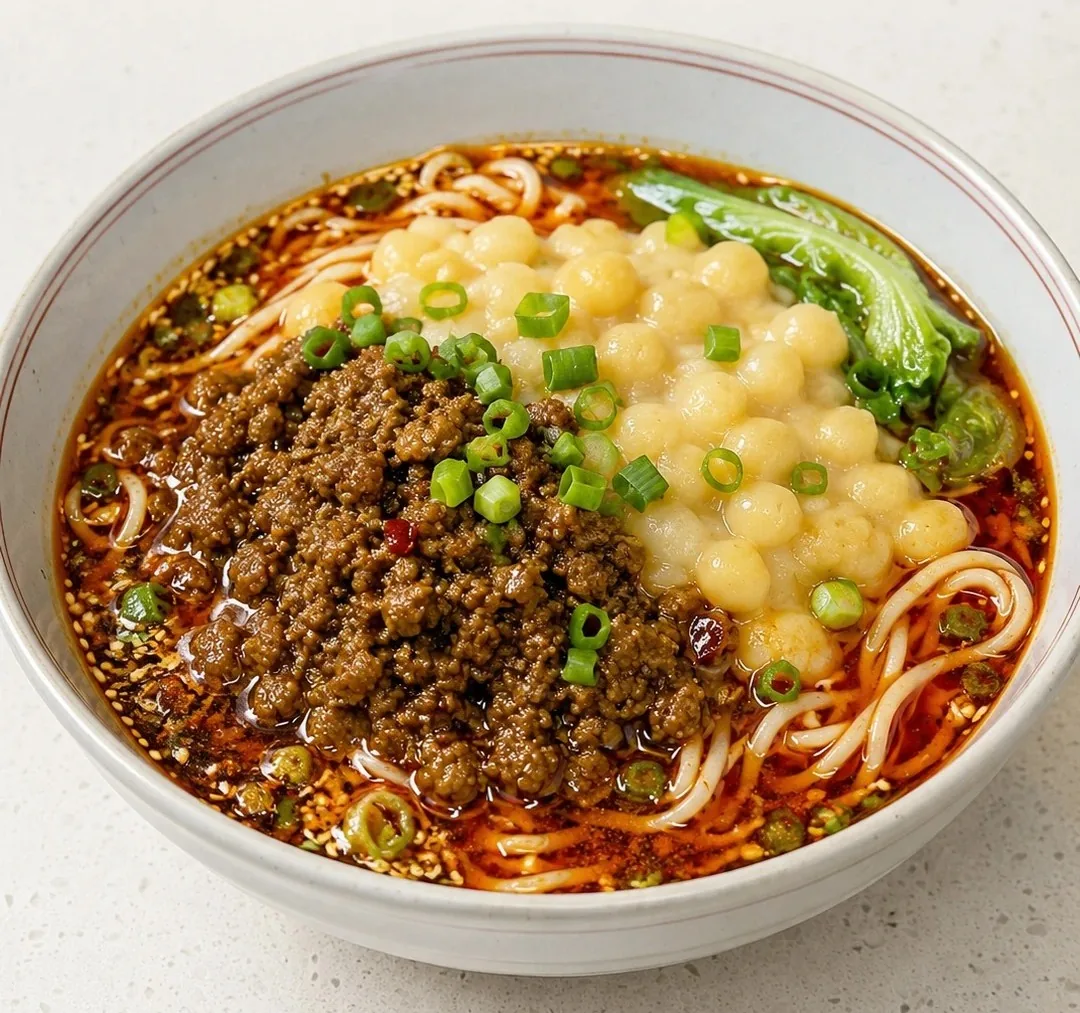
Noodle sellers once carried a stove, noodles and seasonings through the streets; fixed neighbourhood shops continue that quick breakfast rhythm. Xiaomian can mean plain seasoned noodles, yet Chongqing menus also use the name for bowls with pea-and-minced-pork sauce, braised beef, pork intestine or pickled vegetables.
The bowl is seasoned before the noodles arrive
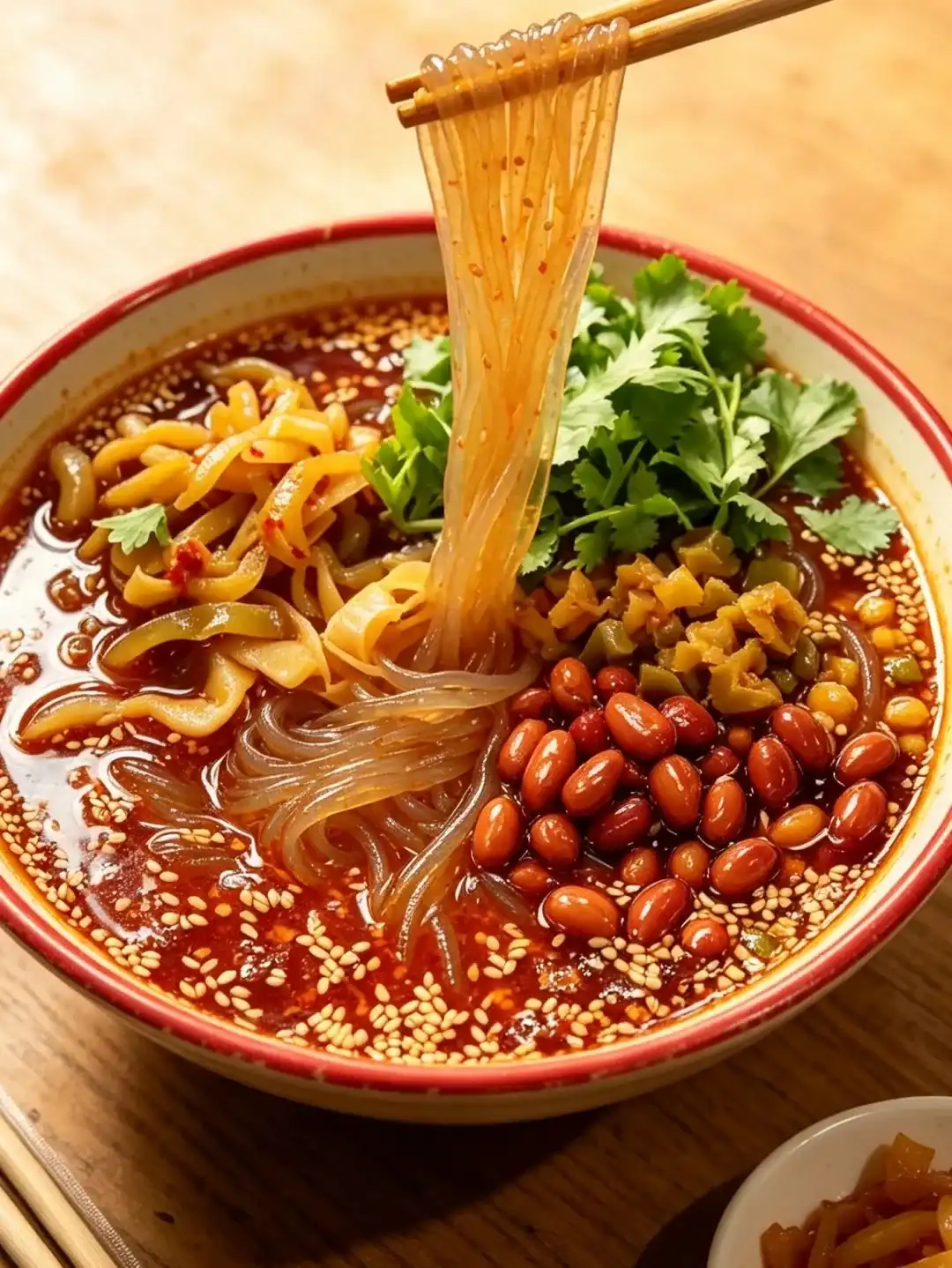
Fresh alkaline wheat noodles keep a resilient bite and hold the dressing well. Soy sauce, chilli oil, Sichuan pepper, ginger water, garlic water, preserved mustard, peanuts, scallion and cooking fat are commonly assembled at the bottom. Mix upwards from the base so the red oil, crunchy pieces and aromatics reach every strand.
Plain noodles show the seasoning most clearly. Wanza combines soft peas with minced-pork sauce; beef and intestine versions use richer braised toppings. Ganliu usually means little broth and a dressing that clings closely to the noodles, while soup versions are looser. State the portion, broth style, heat and topping together when ordering.
Flavour and ingredient note
Red versions have clear chilli heat and Sichuan-pepper numbness. Intestine noodles contain pork intestine, and wanza commonly contains minced pork; ask about the bowl's cooking fat when ordering a vegetarian version.